Launch offer — valid today only

📄 Digital book in PDF · read it on your phone or print it

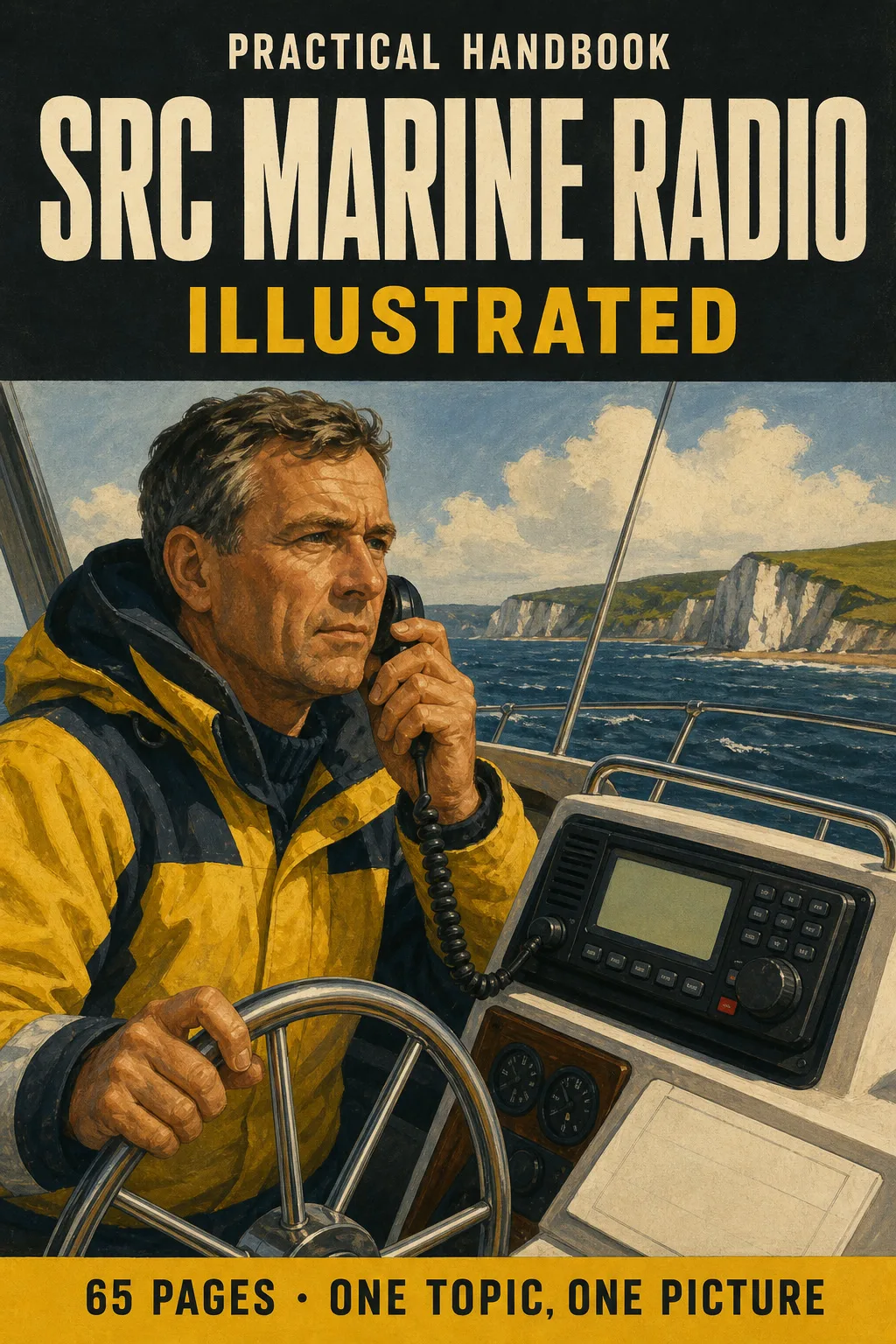
VHF, DSC and the UK SRC in Drawings Every Distress Call in the Same Order

For the UK Short Range Certificate: the MAYDAY call line by line, the DSC distress alert step by step, channels 16 and 70, the phonetic alphabet, PAN PAN and SECURITE. Every topic has its own page: the drawing first, then what you need to remember. 65 illustrated pages.

START STUDYING THIS WAY

🔒 Secure checkout · PDF by email · 30-day guarantee

Every topic, its own pageEach procedure drawn, with the explanation alongside
65 illustrated pages8 parts, from the two licences to course-day revision
Up-to-date sourcesMCA (MGN 324), Ofcom and the ITU Radio Regulations
PDF by emailFormat

Look Inside the Book

Every page has one large drawing and a box with the channels, the call order or the steps you need to know:

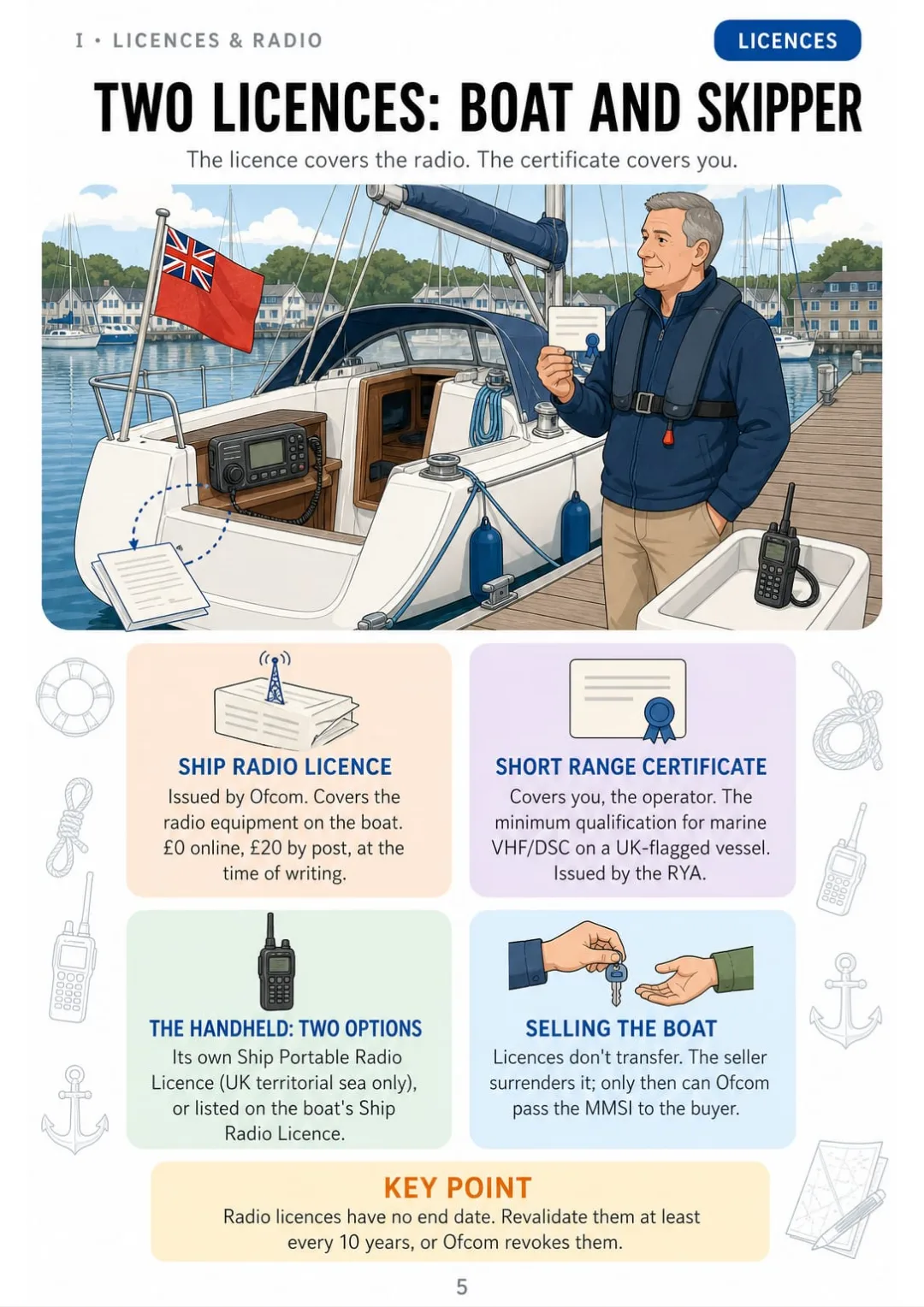
Ship Radio Licence for the equipment, SRC for the operator: two separate permissions.
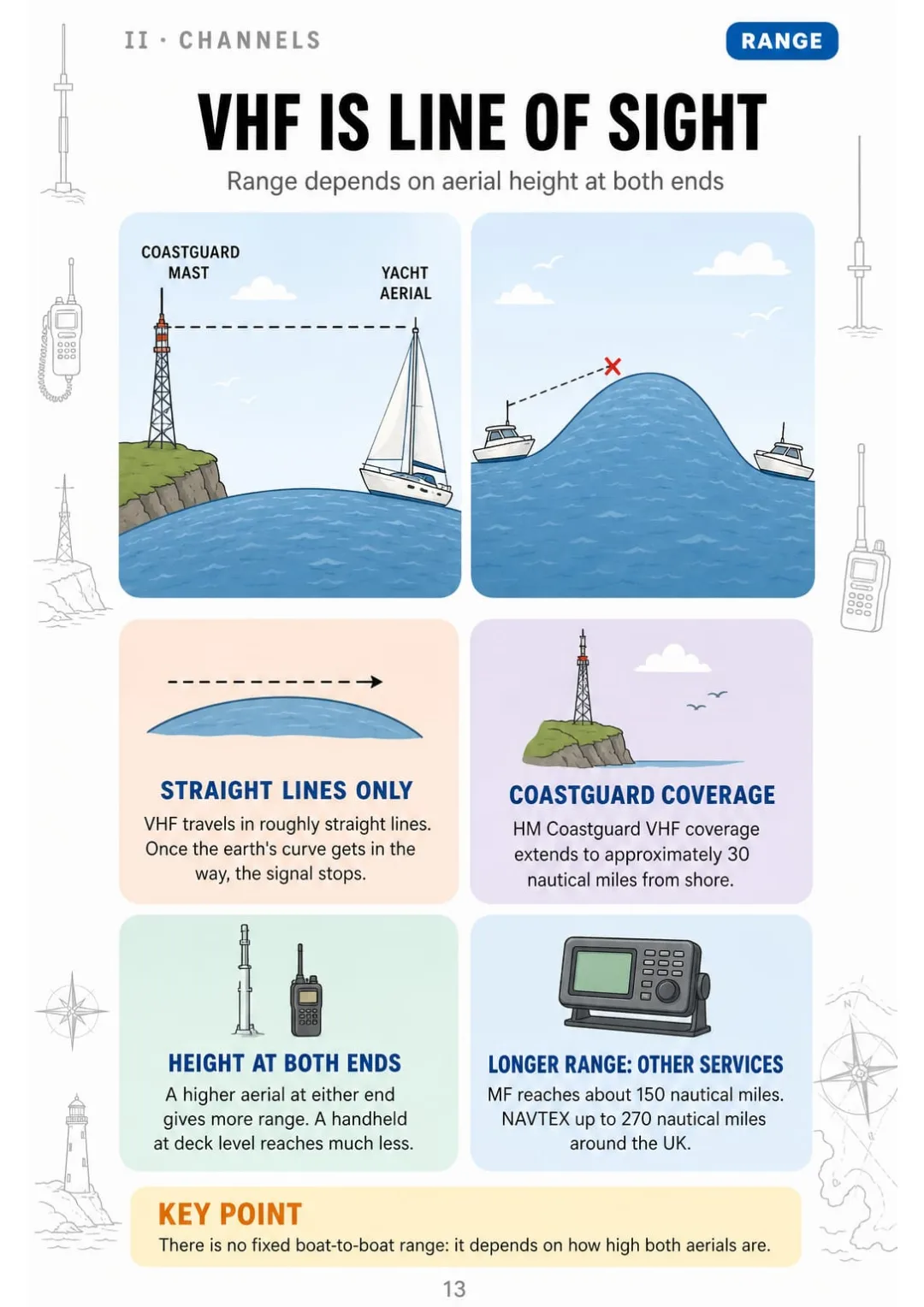
HM Coastguard VHF reaches approximately 30 nautical miles from shore; range depends on aerial height.
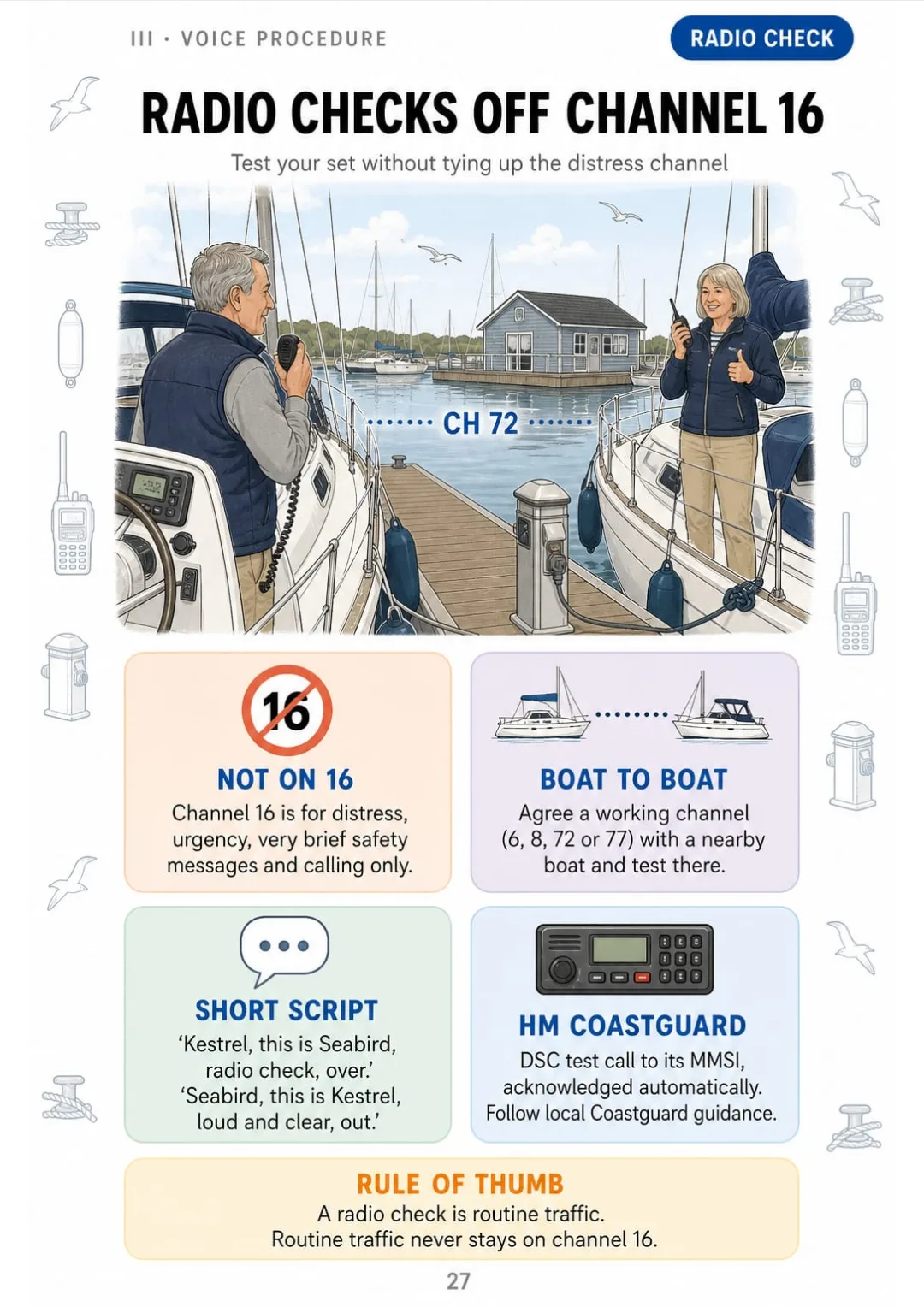
Radio checks on a working channel with another boat, never on channel 16.
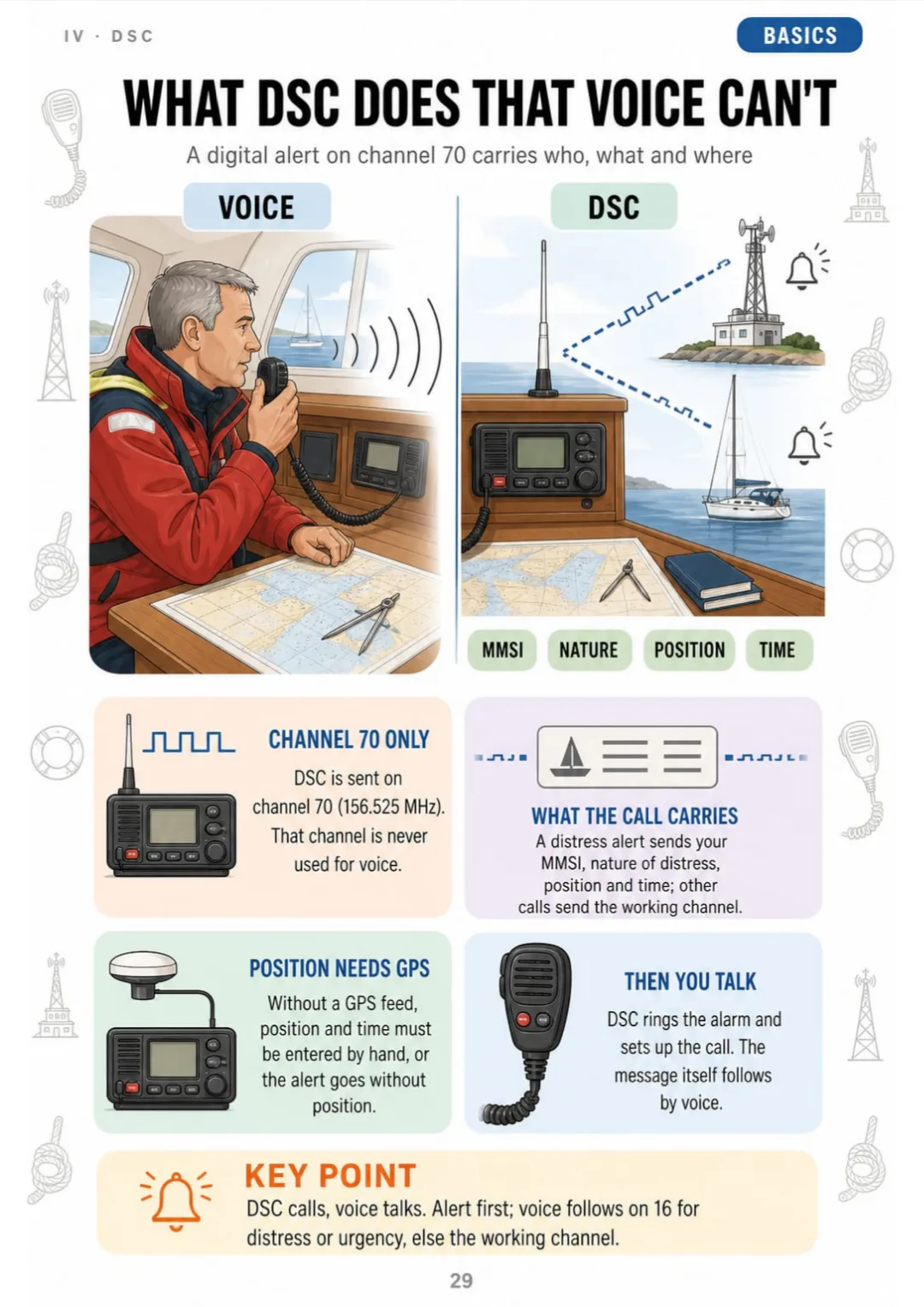
DSC on channel 70: MMSI, nature, position and time in one digital alert.
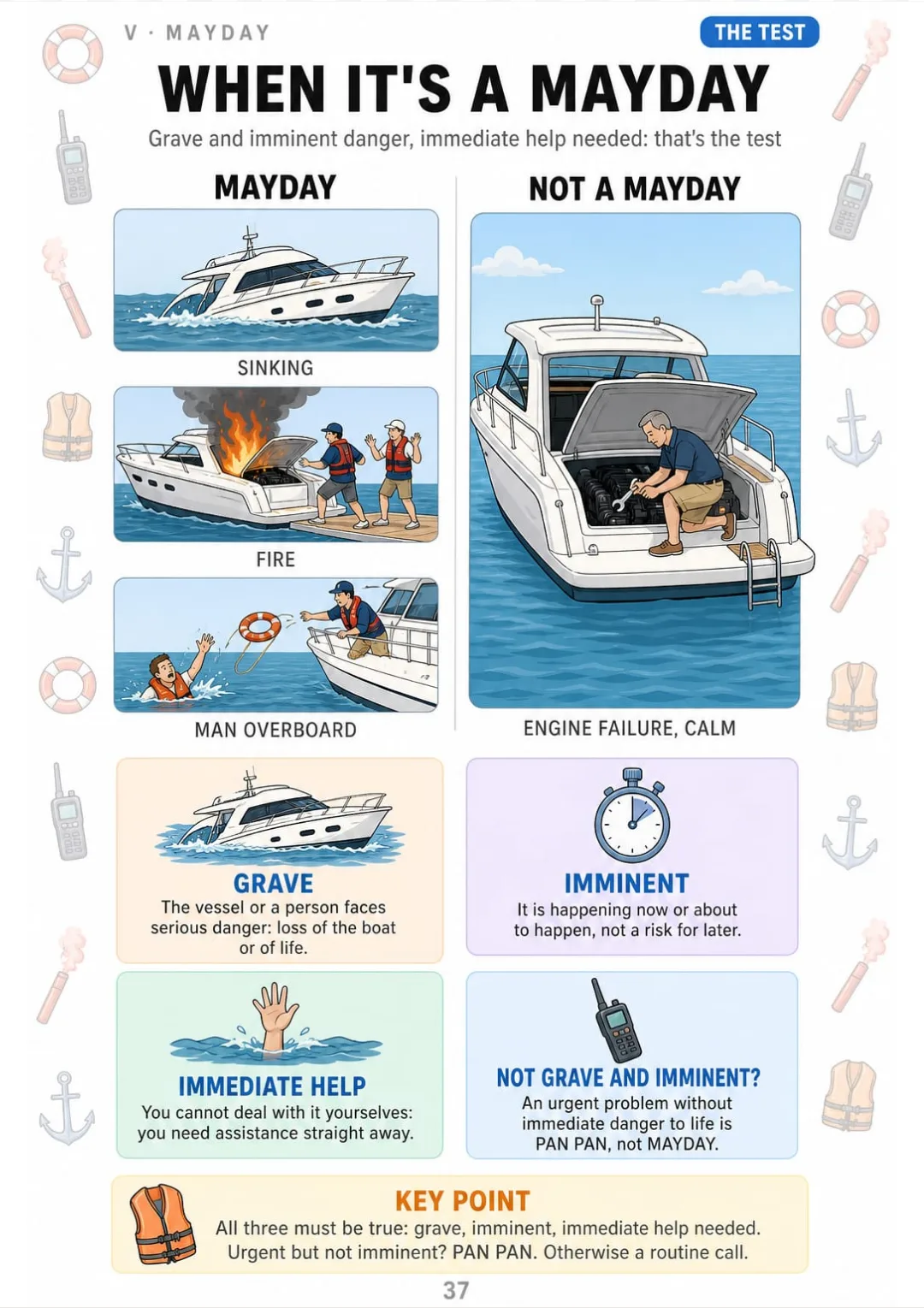
MAYDAY = grave and imminent danger with immediate help needed; engine failure in calm water isn't one
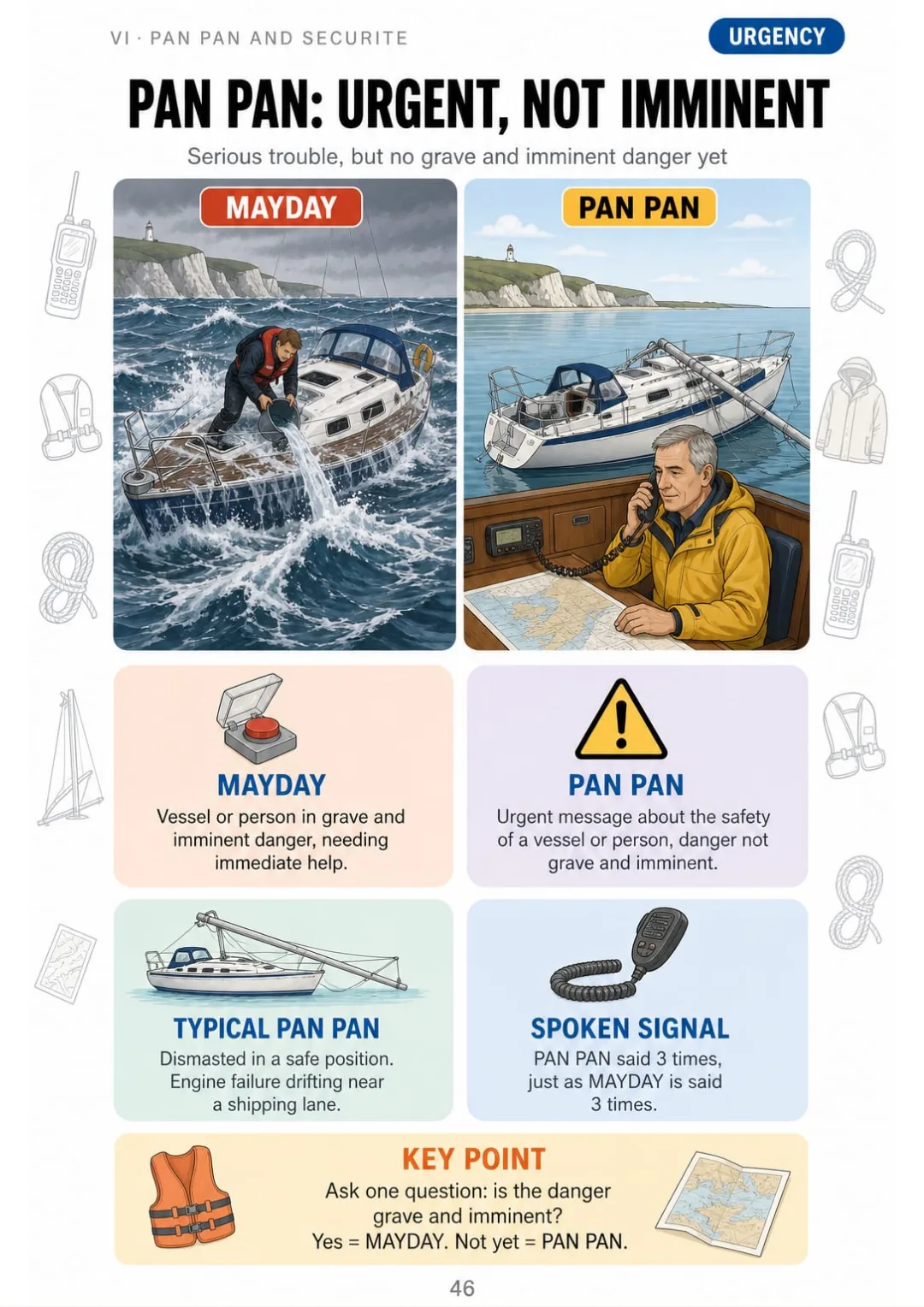
MAYDAY vs PAN PAN side by side: grave and imminent danger, or urgent but not yet
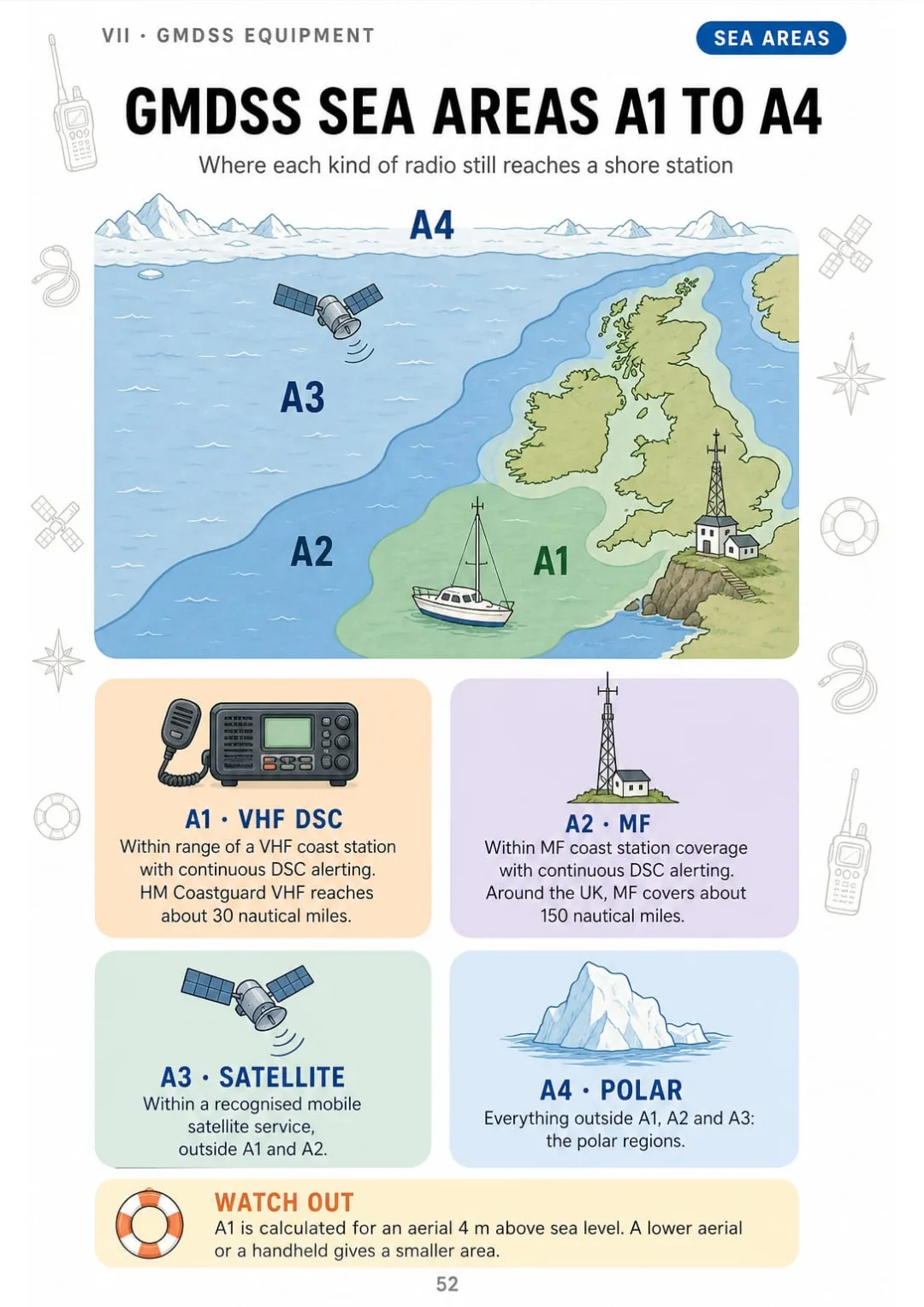
A1 = VHF DSC coast coverage (about 30 nm) · A2 = MF · A3 = satellite · A4 = polar
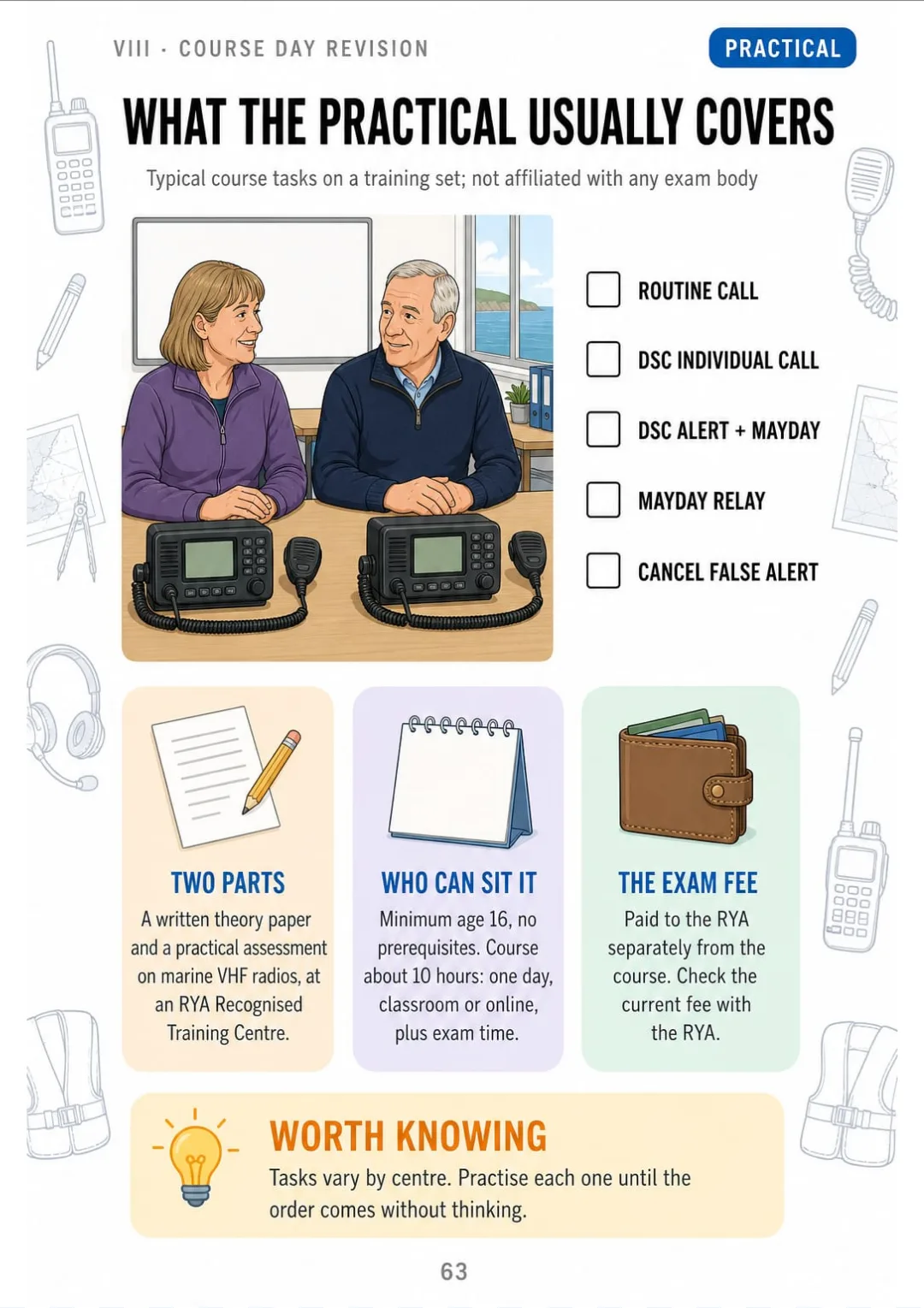
Routine call, DSC individual, DSC alert + MAYDAY, MAYDAY RELAY, cancelling a false alert.

Swipe to see more →

These are real pages from the book. The table of contents is the full one: 8 parts and 61 topics.

The Problem Isn't You. It's How It Was Explained.

It's course day. The instructor hands you the set: "Fire in the engine room. Send the DSC alert, then the MAYDAY." You know the words. The order won't come.

The handbook gave you the MAYDAY as a paragraph and the DSC alert as a list of menu steps. Text read in a hurry doesn't hold up with a handset in your hand.

Radio checks on a working channel with another boat, never on channel 16.

In the book, the MAYDAY is drawn line by line with a worked example underneath, and the DSC distress alert is 6 boxes in order. You see the sequence, not just the words.

The same goes for saying numbers on the radio, prowords, OVER and OUT, giving your position and the routine call: each one has its own page.

So when the instructor gives you the scenario, the order comes without a pause, and you don't need to go back to the handbook to check.

COMPARE FOR YOURSELF

The Same Topic, Two Ways to Study It

THIS
  • The handbook: line after line
  • Radio range explained only in words
  • You arrive on course day still unsure
VHF radio waves propagate essentially in straight lines and are therefore limited to line-of-sight range, which is determined principally by the height of the transmitting and receiving aerials above sea level and, to a lesser extent, by transmitter output power. Communication between two small craft with low aerials may be limited to a few nautical miles, whereas HM Coastguard stations, with elevated aerials, typically achieve coverage of approximately 30 nautical miles from the coast. Atmospheric conditions may occasionally extend or reduce the effective range.
FOR THIS
  • Line of sight in one drawing
  • The ranges in one box
  • You see why aerial height beats extra watts
HM Coastguard VHF reaches approximately 30 nautical miles from shore; range depends on aerial height.
CONTENTS

Take a Look at the 8 Parts and 61 Topics

Licences and your radio, channels, voice procedure, DSC, MAYDAY, PAN PAN and SECURITE, GMDSS equipment and course-day revision: 65 pages, all illustrated.

ILicences and Your Radio · pp. 5-12
  1. Two licences: one for the boat, one for you
  2. Your MMSI: nine digits that identify the boat
  3. Call sign and boat name: how you say who you are
  4. The fixed VHF/DSC set, every control labelled
  5. Squelch and volume: set them correctly
  6. High power, low power: 25 W and 1 W
  7. Handheld VHF: what changes
  8. GPS connected or not: why position matters for DSC
IIChannels and How VHF Travels · pp. 13-20
  1. VHF is line of sight
  2. Channel 16: distress, urgency, safety and calling
  3. Channel 70: DSC only, never voice
  4. Simplex and duplex: one frequency or two
  5. Intership channels: 6, 8, 72 and 77
  6. UK channels for marinas and clubs: 80, M and M2
  7. Channel 67 and HM Coastguard working channels
  8. Dual watch and tri-watch: hearing 16 while you talk
IIIVoice Procedure · pp. 21-28
  1. The phonetic alphabet, A to Z
  2. Saying numbers on the radio
  3. Prowords: the radio's own vocabulary
  4. OVER or OUT, never both
  5. A routine call, step by step
  6. Giving your position: lat/long or bearing and distance
  7. Radio checks without blocking channel 16
  8. Rules on air: secrecy, discipline and the master's authority
IVDSC: Digital Selective Calling · pp. 29-36
  1. What DSC does that voice can't
  2. The four categories: Distress, Urgency, Safety, Routine
  3. Individual call to another boat
  4. All-ships call
  5. Receiving a DSC call: what the screen tells you
  6. The DSC distress alert: lift the cover, hold the button
  7. After the alert: automatic repeats and acknowledgement
  8. DSC test call: checking without causing an alarm
VMAYDAY: Distress · pp. 37-45
  1. When it's a MAYDAY and when it isn't
  2. The MAYDAY call, line by line
  3. MIPDANIO: the order in one word
  4. A complete worked MAYDAY
  5. DSC alert first, voice second
  6. Acknowledging a MAYDAY you hear
  7. MAYDAY RELAY: calling for someone else
  8. Radio silence: SEELONCE MAYDAY, SEELONCE DISTRESS, SEELONCE FEENEE
  9. Cancelling a false alert
VIPAN PAN and SECURITE · pp. 46-51
  1. PAN PAN: urgent, but not grave and imminent
  2. The PAN PAN call, line by line
  3. PAN PAN MEDICO: medical advice from shore
  4. SECURITE: safety warnings
  5. Maritime Safety Information from HM Coastguard
  6. Priority on air: distress, urgency, safety, routine
VIIGMDSS Equipment: NAVTEX, EPIRB, SART, AIS · pp. 52-59
  1. GMDSS and sea areas A1 to A4
  2. NAVTEX: 518 kHz in English
  3. Reading a NAVTEX message header
  4. EPIRB: 406 MHz to satellite
  5. PLB: the personal beacon
  6. SART: the 12 dots on the radar
  7. AIS: Class A, Class B and what it shows
  8. Batteries, aerials and checks before you sail
VIIICourse Day Revision · pp. 60-65
  1. The three calls on one page
  2. Channel cheat sheet
  3. The DSC distress sequence in 6 boxes
  4. What the practical assessment usually covers
  5. Mistakes people often make on the radio
  6. Your boat's radio card

One Page, One Topic, All Clear

Think of it this way:

You're two miles off the headland, the engine has died and the tide is setting you towards the rocks. MAYDAY or PAN PAN?

You've revised the page and printed it for the chart table: grave and imminent danger on one side, urgent but not yet on the other. Drifting onto rocks is the first; drifting in open water with no danger yet is the second, with the script for each one underneath.

MAYDAY = grave and imminent danger with immediate help needed; engine failure in calm water isn't one

The same with the DSC alert, channel 70, sea areas A1 to A4, NAVTEX and the SART: each one on its own page.

SRC Marine Radio Illustrated is 65 illustrated pages in 8 parts, one topic per page, with a course-day revision section at the end.

What you see drawn, you don't have to memorize.

What's Inside SRC Marine Radio Illustrated:

Ipp. 5-12

Licences and Your Radio

The Ship Radio Licence and the SRC, your MMSI, call sign, every control on the fixed set, squelch, 25 W and 1 W, handhelds and GPS.

IIpp. 13-20

Channels and How VHF Travels

Line of sight, channel 16, channel 70, simplex and duplex, intership channels, UK marina channels, channel 67 and dual watch.

IIIpp. 21-28

Voice Procedure

The phonetic alphabet, numbers, prowords, OVER and OUT, the routine call, giving your position, radio checks and the rules on air.

IVpp. 29-36

DSC: Digital Selective Calling

What DSC does, the four categories, individual and all-ships calls, reading the screen, the distress alert, acknowledgement and the test call.

Vpp. 37-45

MAYDAY: Distress

Send a MAYDAY without losing the order: when it applies, the call line by line, MIPDANIO, a worked example, DSC first, acknowledging, MAYDAY RELAY, radio silence and cancelling a false alert.

VIpp. 46-51

PAN PAN and SECURITE

PAN PAN and when to use it, the call line by line, PAN PAN MEDICO, SECURITE, Maritime Safety Information and priority on air.

VIIpp. 52-59

GMDSS Equipment: NAVTEX, EPIRB, SART, AIS

GMDSS sea areas, NAVTEX and its message header, EPIRB, PLB, SART, AIS Class A and B, and the checks before you sail.

VIIIpp. 60-65

Course Day Revision

The three calls on one page, a channel cheat sheet, the DSC distress sequence in 6 boxes, the practical assessment, frequent mistakes and your boat's radio card.

At the end of the book: A course-day revision part: the three calls on one page, a channel cheat sheet, the DSC distress sequence in 6 boxes and your boat's radio card.
Plus: 2 Free Books

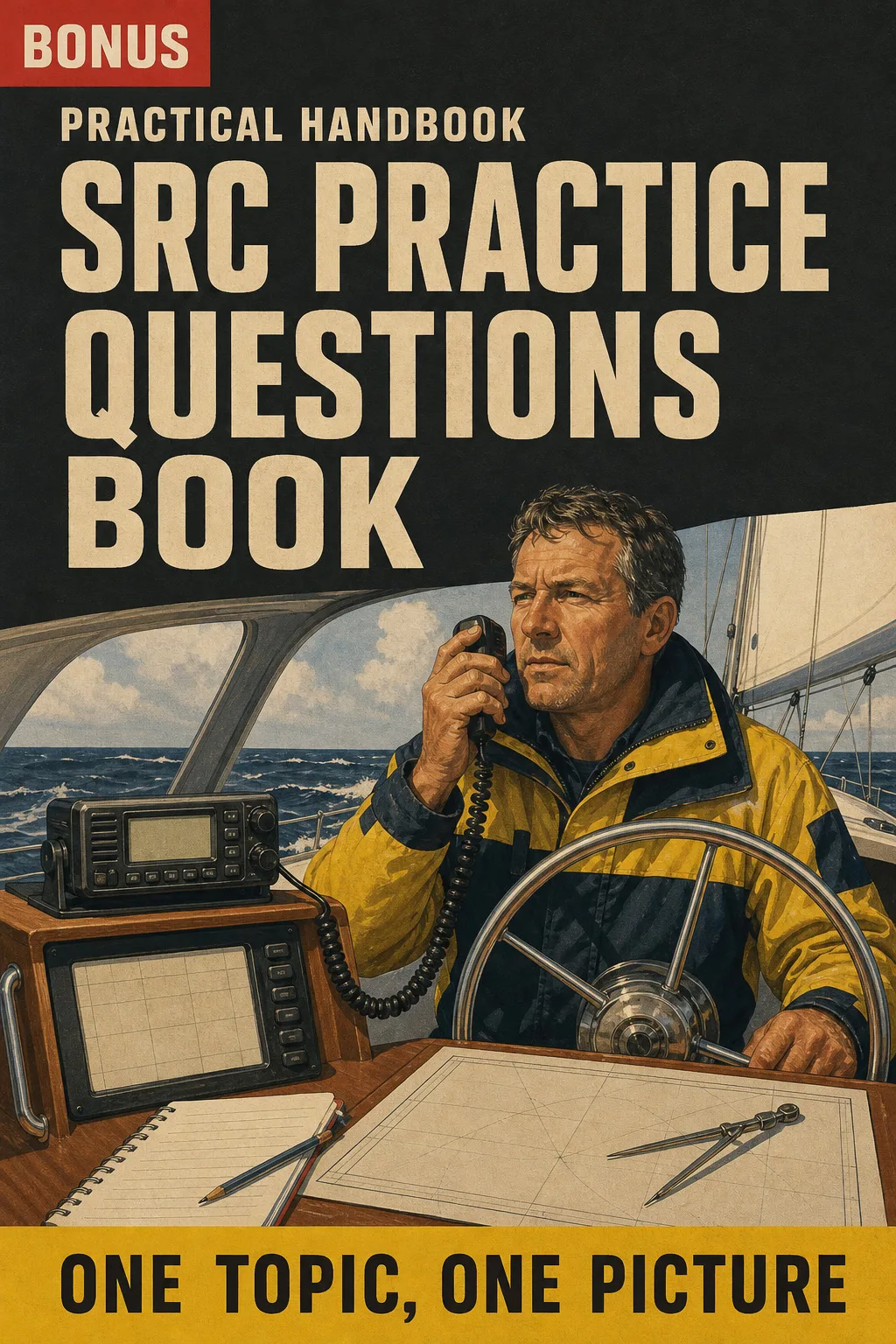
SRC Practice Questions Book

BONUS 1: «SRC Practice Questions Book»

Value on its own: US$ 17.90

Test yourself with exam-style questions on channels, DSC and distress procedure, with every answer explained, so you know what you know before course day.

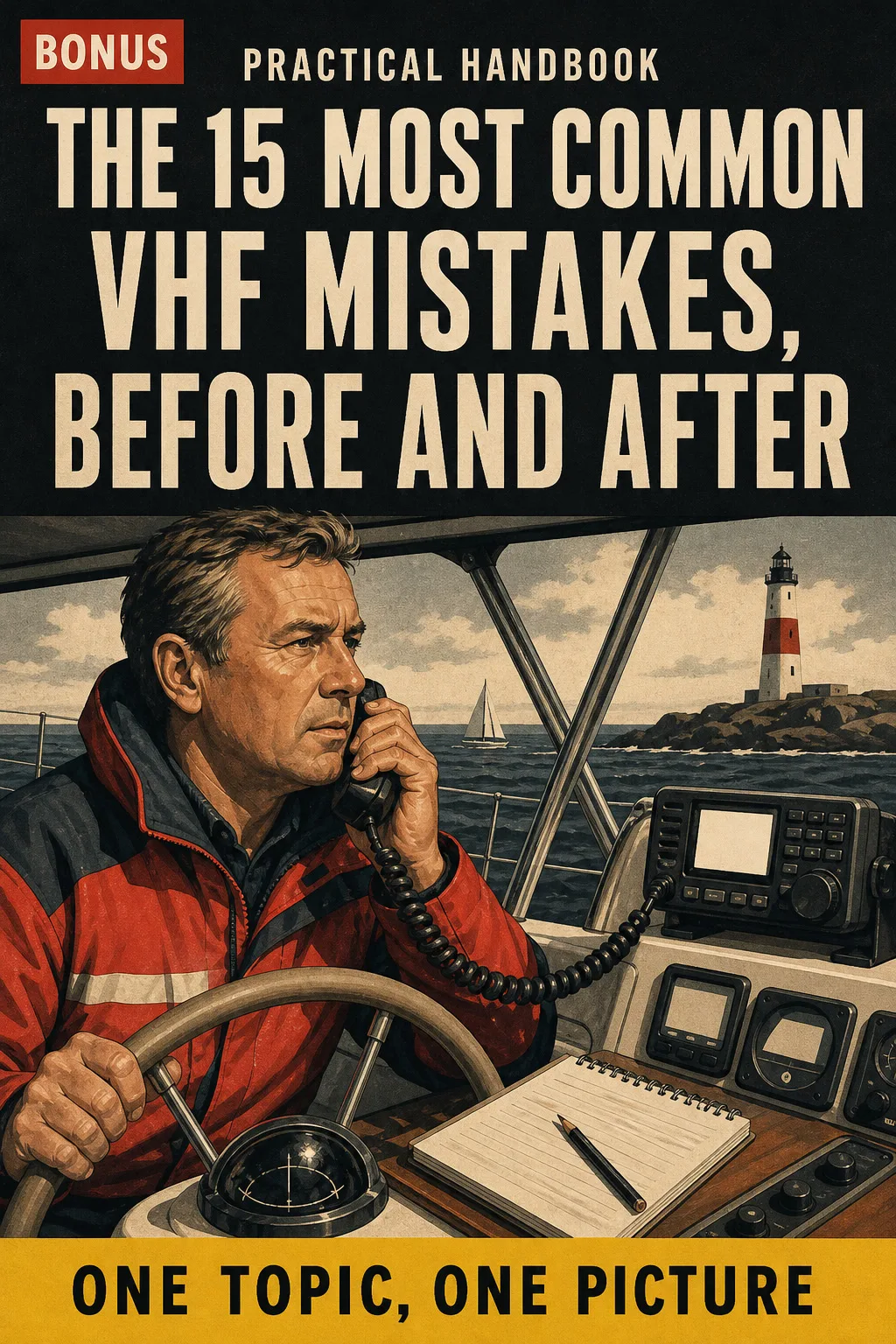
The 15 Most Common VHF Mistakes, Before and After

BONUS 2: «The 15 Most Common VHF Mistakes, Before and After»

Value on its own: US$ 14.90

See the wrong call and the right call side by side, from the missing MMSI to the cancelled alert sent the wrong way, so you don't repeat them on the radio.

SRC Marine Radio Illustrated with 2 Free Books

  • SRC Marine Radio Illustrated: 65 illustrated pagesUS$ 63
  • BONUS 1: SRC Practice Questions BookUS$ 17.90
  • BONUS 2: The 15 Most Common VHF Mistakes, Before and AfterUS$ 14.90
  • High-resolution PDF to printIncluded
Total value US$ 95.80
YOUR PRICE:
US$ 27
You save US$ 68.80
YES, I WANT SRC MARINE RADIO ILLUSTRATED FOR US$ 27

📄 This is a digital PDF book sent to your email: nothing is printed or shipped.

Secure purchaseEncrypted payment30-day guarantee

PDF by email: We email you SRC Marine Radio Illustrated as a PDF, together with the two free books. It's a single payment: no installments, no extra charges.

Who This Book Is For

You're studying for the SRC

You're studying for the SRC

Each topic on its own page, drawn, so the theory makes sense the first time you see it instead of the third time you read it.

Your course day is close

Your course day is close

The three calls on one page and the DSC sequence in boxes: a quick run-through the night before, in the same order every time.

You already have a radio on board

You already have a radio on board

Print the pages you need and keep them by the chart table, so the MAYDAY order is there at a glance.

Everything You Get Today

US$ 95.80US$ 27
YES, I WANT SRC MARINE RADIO ILLUSTRATED FOR US$ 27

📄 This is a digital PDF book sent to your email: nothing is printed or shipped.

30DAYS
GUARANTEE

30-Day Guarantee

Try SRC Marine Radio Illustrated for 30 days, bonus books included.

We refund everything if the file won't open, if the book isn't what you see here, if you were charged twice or if the email doesn't arrive. Just email us.

You pay once. No subscriptions.

Frequently Asked Questions

Is it for me if I've just bought a boat and booked my SRC course?

Yes. It's written for adults sitting the UK Short Range Certificate. The radio is drawn as a typical fixed VHF/DSC set with every control labelled. The procedure, the channels and the call order are the same whatever brand you have; menu names and button positions vary, so check your set's manual for those.

Where does the content come from?

It's checked against current UK guidance: the Maritime and Coastguard Agency (MGN 324), Ofcom ship radio licensing and MMSI guidance, and the ITU Radio Regulations and GMDSS procedures behind the SRC syllabus. UK channels and UK procedure, not American ones.

Is it official material?

No. It's an independent illustrated study book. It isn't produced or endorsed by the RYA, the MCA, Ofcom or any training centre.

Does it replace the SRC course?

No. To get the SRC you still take the course and the assessment at a recognised training centre. If you already have the handbook and an online course, this doesn't repeat them in more words: it draws them. The MAYDAY line by line, the DSC alert in 6 boxes and the three calls on one page, so you can revise in minutes and print what you want by the chart table.

Are the practice questions the real exam questions?

No. They're written for this book, in the style of the topics covered, so you can check what you know before course day.

How do I receive it?

The book and the 2 bonus books arrive as PDFs by email, at the address you enter when you pay. You can read them on any device or print them.

Do I have to pay every month?

No. It's a one-off payment. No subscription.

Can I have it on paper?

Yes. It's a PDF you can print at home or at a print shop, and keep the pages you need by the chart table.

How does the refund work?

You have 30 days. We refund everything if the file won't open, if the book isn't what you see on this page, if you were charged twice or if the email doesn't arrive: just email us.

Before You Close This Page

No more rereading without anything sticking.

The MAYDAY order is drawn: see it once and it's clear.

You arrive on course day knowing where everything is.

Drawings make studying faster.

The book is right below.

One-time payment: US$ 27 · Guarantee: 30 days · PDF by email

YES, I WANT SRC MARINE RADIO ILLUSTRATED FOR US$ 27

📄 This is a digital PDF book sent to your email: nothing is printed or shipped.